

The process of installing a cat flap may be a bit daunting, but it is fairly easy to do with the right instructions. Decide how high you'd like the cat flap (normally it's at belly height). Note this on your door and use the template provided to help you drill.
If you have a kitten that is still a newborn, gently prop the door slightly open and invite it to go through. Reward the kitten each time it passes.
Take a measurement of the door
A cat flap allows your pet to enter and exit your home at its convenience. This will help keep your cat healthy by making sure that it is exercising as well as being able to get back inside if trapped outside in bad weather, especially in winter. It can also cut down on the amount of time you'll have to spend letting it out or in. It can also keep your home safe by allowing you to know when it's been out.
It is important to ensure that the cat flap is set up correctly to stop your pet from being forced through it or escaping by other animals (e.g. dogs). It is important to measure the height of your pet's belly and the doorway to your home so that you can ensure that the flap is at the right height. If your cat is a little larger or shorter than the normal, you can adjust the position of the flap by moving it up or down by a tiny amount.
The next step is to make use of a spirit level to mark the centre of the door, where you will install the flap. Using the marking as a reference, use a jigsaw and cut out the form of the flap in the door. After cutting the area out and sanded the edges to create smooth surfaces. Drill any necessary holes.
Fitting a cat flap should not take longer than two hours. The process can be slightly more difficult if you have to install it in the form of a uPVC door or composite one. This is because these doors are available in various thicknesses, which can impact the way that holes are cut. This is why we recommend hiring a professional to carry out the work, particularly if you have never worked with glass before.
Measure Your Cat
A cat flap can save you from hours of hearing your pet's cries for you to let it in or out. This is especially helpful for cats that are inside in all weathers when you are at work.
If you're planning to put a cat flap in your door it is important to measure your cat before attempting the task. It may seem like a simple task, but it's crucial to get the measurements right. If not, your cat may have difficulty putting it in use.
First, ensure that your cat is calm before taking measurements. You'll need to put your cat in a place in which they cannot move. Also, ensure that the measuring tape is flat and not curved against their body. You can get an accurate measurement by keeping the measuring tape or the ruler flat against the body of the animal from the top to the bottom.
Once you've determined your cat's measurement, it's time to examine the door to decide where to place the flap. The best option is to position the flap at the height of your cat's belly as it will allow them to get through it without much effort. This will also prevent the flap making lots of noise when it swings open and shut.
It is also important to think about the thickness and the structure of the uPVC door or composite. While timber doors are of the same thickness, uPVC and composite doors can be very different in their overall construction and this can make the installation of a cat flap more complicated as you will need to make sure the hole you cut is the correct size for your pet.
It is also worthwhile looking through the instructions that come with the kit to find an illustration template that can be used to mark the location of the hole inside the door. This will allow you to determine where the opening needs to be and also ensure that the template is placed correctly on the door. Using a spirit level to ensure that the template is sitting flush against the door will be extremely helpful.
Cut the Flap
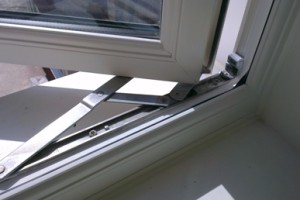
Before you can put in your cat flap you have to cut the door panel in order to make a space big enough for it. This can be a challenging job and it is recommended to seek the help of a professional cat flap fitter to complete this task in case you don't have the expertise or knowledge to tackle it yourself. You can also refer to the instructions provided in the kit to find out how to do it properly.
To do this, you will need to take a measurement of the height of your cat or kitten's belly and use that as a reference point. A good guideline is to put the flap of your cat about 10 centimeters from the ground as this is the typical belly height for cats. This will allow your cat to pass through the flap easily and make it more difficult for other cats and nosy neighbours to get inside or out.
Once you've determined the best location for the cat flap to be placed, mark this position on the door with the help of a pencil. If your kit has an outline put it on top of the door. Use the markings on the template to drill holes at each corner. After that, you'll be able to cut the template and replace it with the flap for cats.
If cat flap cost near me are installing your cat flap on a door made from wood or uPVC, it is possible to do this yourself if you are confident enough to use a Jigsaw. Be cautious not to cut into the mullions or rails that run vertically of your door. You can use a Jigsaw to cut your panel into a circle or square depending on the way you want it. Be patient and don't make the jigsaw cut faster.
Once the hole has been cut, carefully place your cat flap in its new place of residence. Make sure that it is firmly secured. If the flap is fitted with screw caps then push them into the protruding bolts. Once the screws are in place, you can sand any rough edges of the cut then apply sealant to any gaps to ensure that there aren't any draughts entering into your home.
Place the Flap
If you have a basic cat flap, you can leave it open and encourage your pet to go through by placing a small amount of cat food on the outside of the door. You can also try pushing the cat with a stick or your hand. Once your pet has become used to moving through the flap, it will be able to come and go as it pleases. This allows you to let it in and out at any time it's wanted.
It is possible to put a cat flap in a UPVC door or a glass door, but it might not be as simple as installing one in a wooden external door. This is because the doors made of UPVC and some kinds of glass doors do not have an even thickness. This could have a significant impact on how you cut the opening for the flap and will also affect whether the flap fits correctly once it's been put in place.
Based on the type of cat flap you select It could be equipped with a mounting kit and a template that will show precisely where to drill holes for it. If the kit doesn't include the template you can use a photocopier to create your own. It's important not to push the jigsaw too in order to cut, so it doesn't leave a bigger than necessary hole in your door.
Certain cat flaps come in circular shapes, which are more difficult to put in. If you have a circular flap, it's essential to make sure the hole is in the proper position on your door because if it's not, the cat can't use it and could be stranded in the open all day (or even at night).
Some cat flaps have locks that permit you to control when your cat comes and goes. These can be very useful if you're concerned about your cat going out at night only to come back in due to the darkness, or you're at work for the entire day. Some locks can be used for entry or exit, and others can be locked in both directions. This is useful for older cats or sick cats who aren't keen to venture out in cold weather.